

A documentation website often starts simple. If you publish a few help articles, product guides, onboarding pages, or internal resources, a standard hosting setup may be enough.
But as your documentation grows, hosting starts to matter more than many teams expect.
More visitors searching for answers, larger knowledge bases, multilingual content, team collaboration, and product updates can gradually increase the demand on your website infrastructure. What worked well for a smaller documentation portal may need more attention as usage grows.
Pages need to load quickly so users can find answers without friction. Search needs to remain responsive. Admin areas need to stay smooth while teams update content. And uptime becomes more important when customers rely on your documentation for support.
At this stage, website performance is no longer only about content quality or design. It also depends on how well your infrastructure is prepared to handle growth.
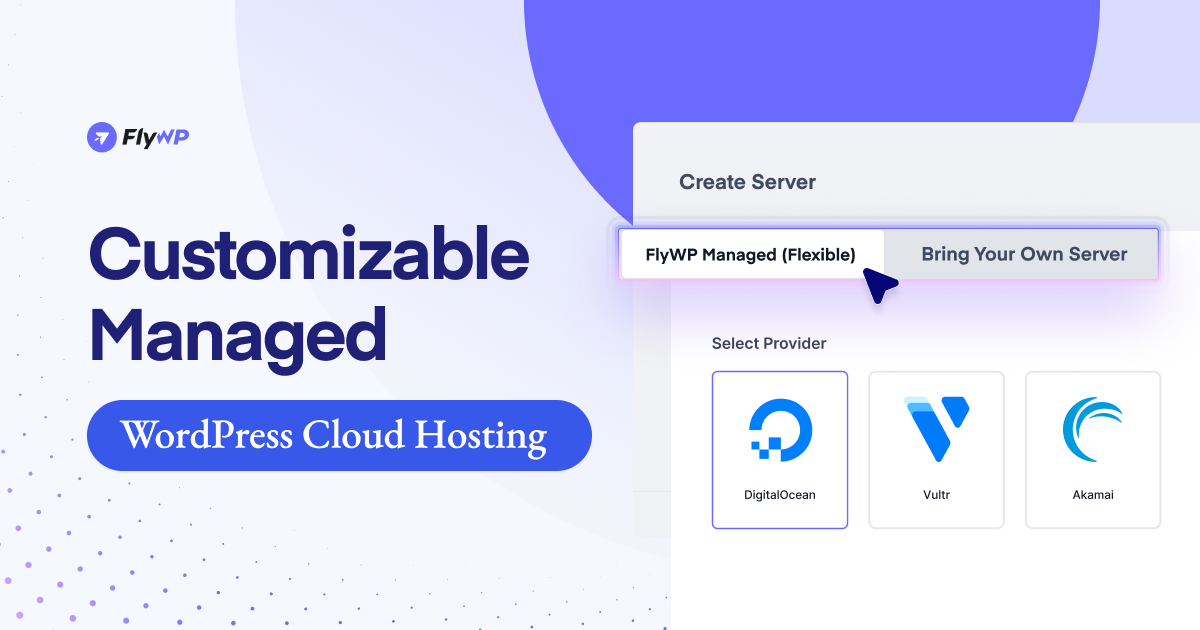
To support these changing needs, FlyWP has evolved into a managed WordPress cloud hosting solution focused on simplifying server management while maintaining flexibility, performance, and control.
It provides a centralized way to manage WordPress infrastructure, helping teams handle scaling, security, and performance more efficiently.
Why Documentation Sites Need Reliable Infrastructure

Many teams focus on creating clear documentation, improving support resources, and reducing ticket volume. But behind every reliable documentation website is a hosting environment that needs to remain stable.
- As documentation platforms grow, common challenges may begin to appear:
- Slower page load times as content expands
- Search delays on larger knowledge bases
- Higher server load during product launches or announcements
- Admin lag while teams update articles
- Difficulty managing backups and staging environments
- More maintenance overhead across multiple tools
The documentation system itself does not always cause these issues. In many cases, they come from hosting environments that were not designed for growing content workloads.
When users cannot quickly access documentation, support pressure can increase, and user experience may decline.
That’s why infrastructure becomes an important part of the documentation strategy.
Meet FlyWP: A Customizable WordPress Hosting for Growing Knowledge Bases
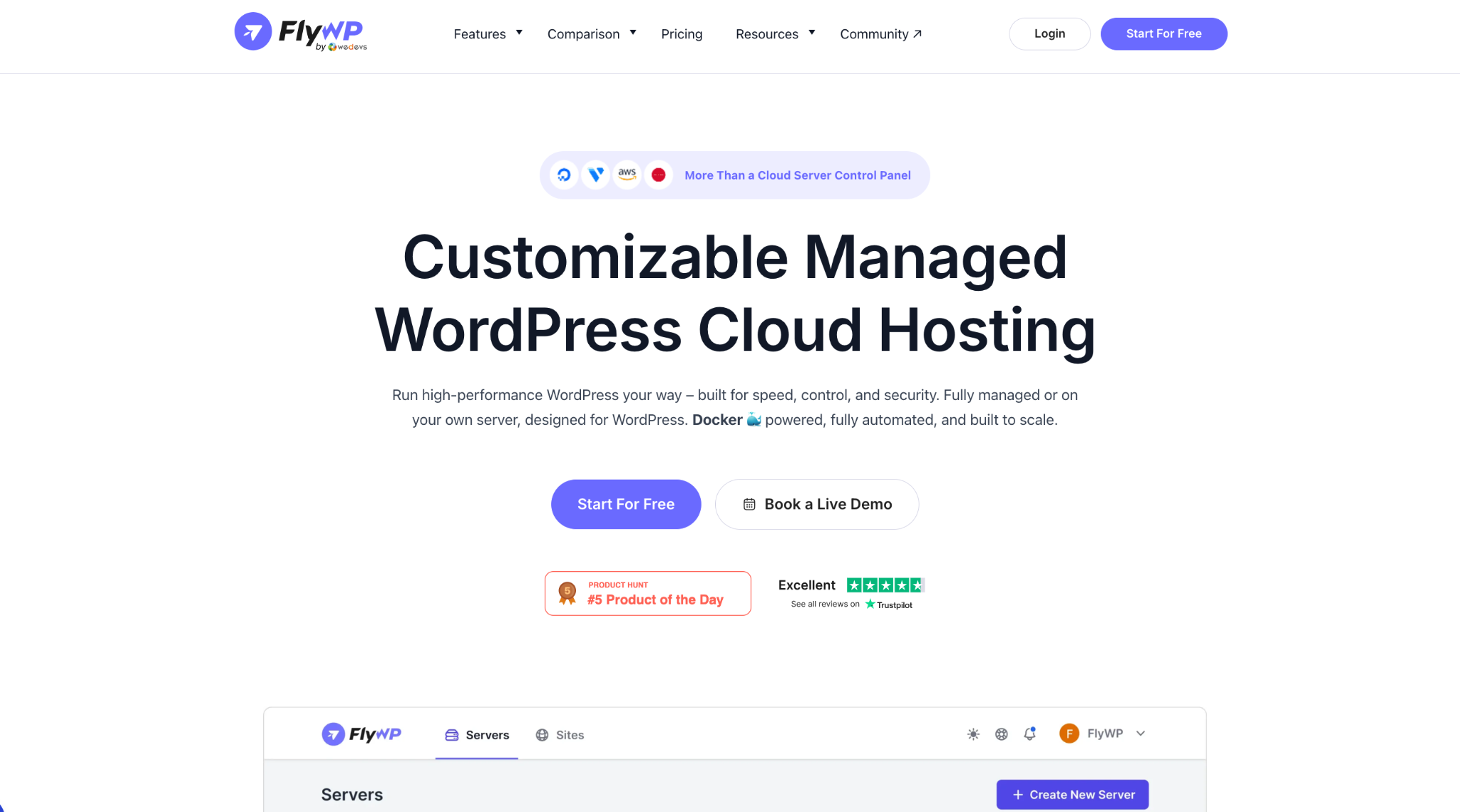
FlyWP started as a WordPress cloud server control panel. Today, it has evolved into a complete managed WordPress cloud hosting platform that combines infrastructure management, performance optimization, security, and server controls in one place.
FlyWP is a customizable managed WordPress hosting platform and cloud server control panel. You can either use FlyWP Managed Hosting or connect your own server and manage everything from one unified dashboard.
Instead of relying on multiple dashboards or disconnected tools, FlyWP centralizes everything into a single platform.
It helps WordPress users maintain a more organized hosting workflow while keeping the flexibility of cloud infrastructure.
Two Ways to Host FlyWP
One of the key strengths of FlyWP is flexibility. Different teams have different hosting needs, so FlyWP supports multiple approaches.
FlyWP Managed (Fully Managed Hosting)
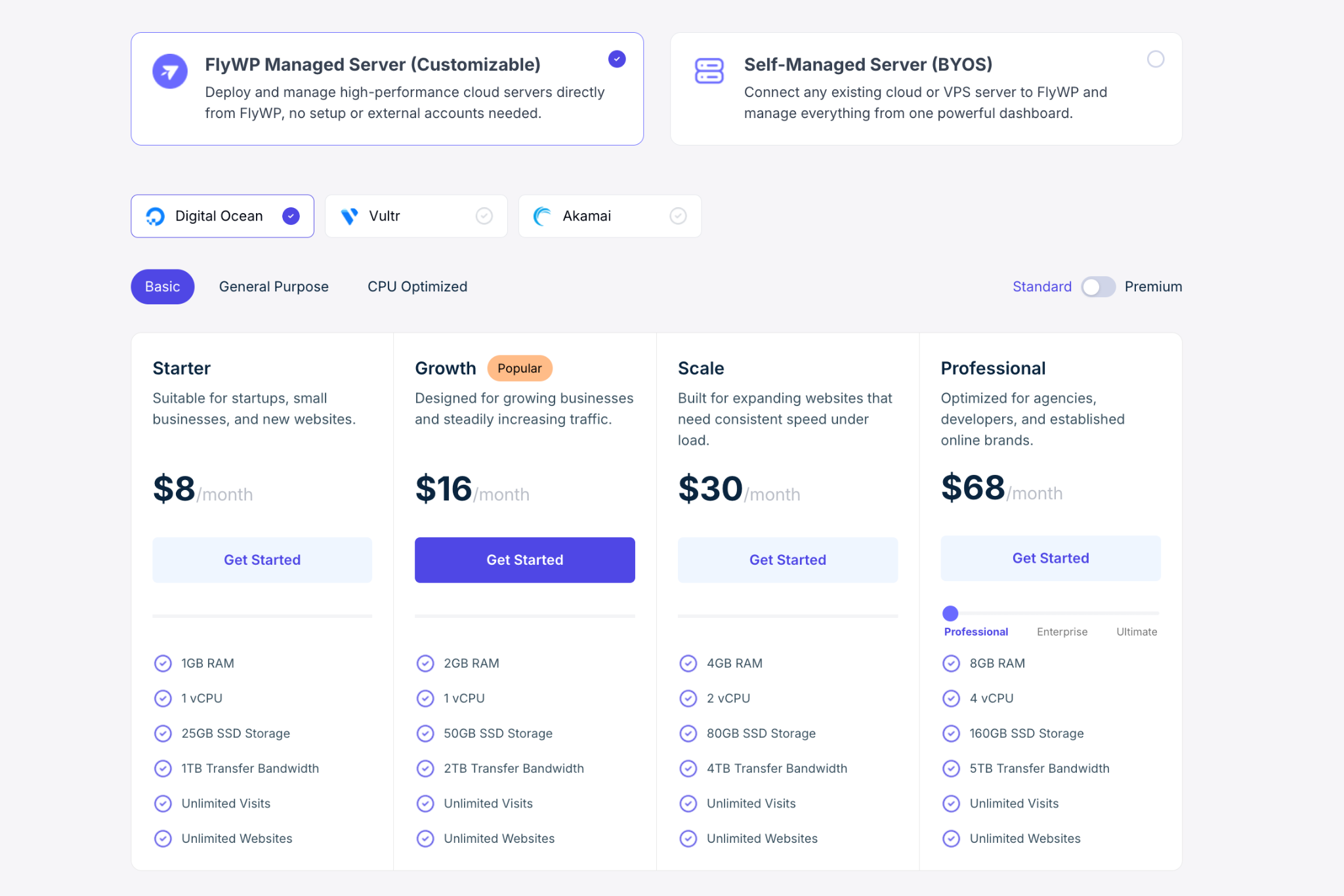
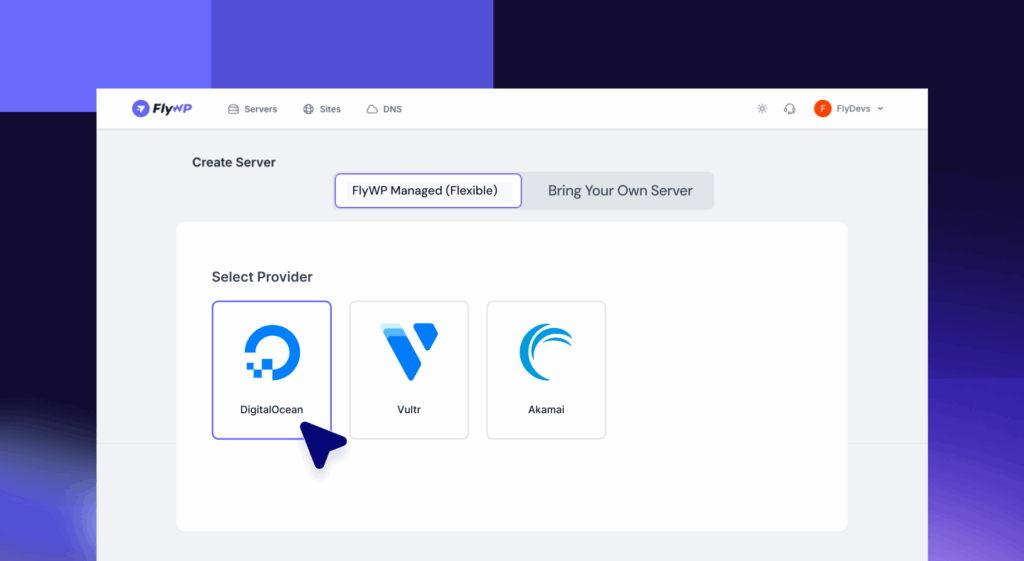
If you prefer a simplified setup, FlyWP offers fully managed hosting. You can deploy servers directly from the dashboard, choose your preferred provider, and let FlyWP handle provisioning, optimization, monitoring, and maintenance.
This reduces the need to manually manage cloud accounts or server-level tasks.
Pricing: Managed hosting starts from $7/month and includes both infrastructure and the control panel. Supported providers currently include DigitalOcean, Vultr, and Akamai.
Self-Managed (Bring Your Own Server)
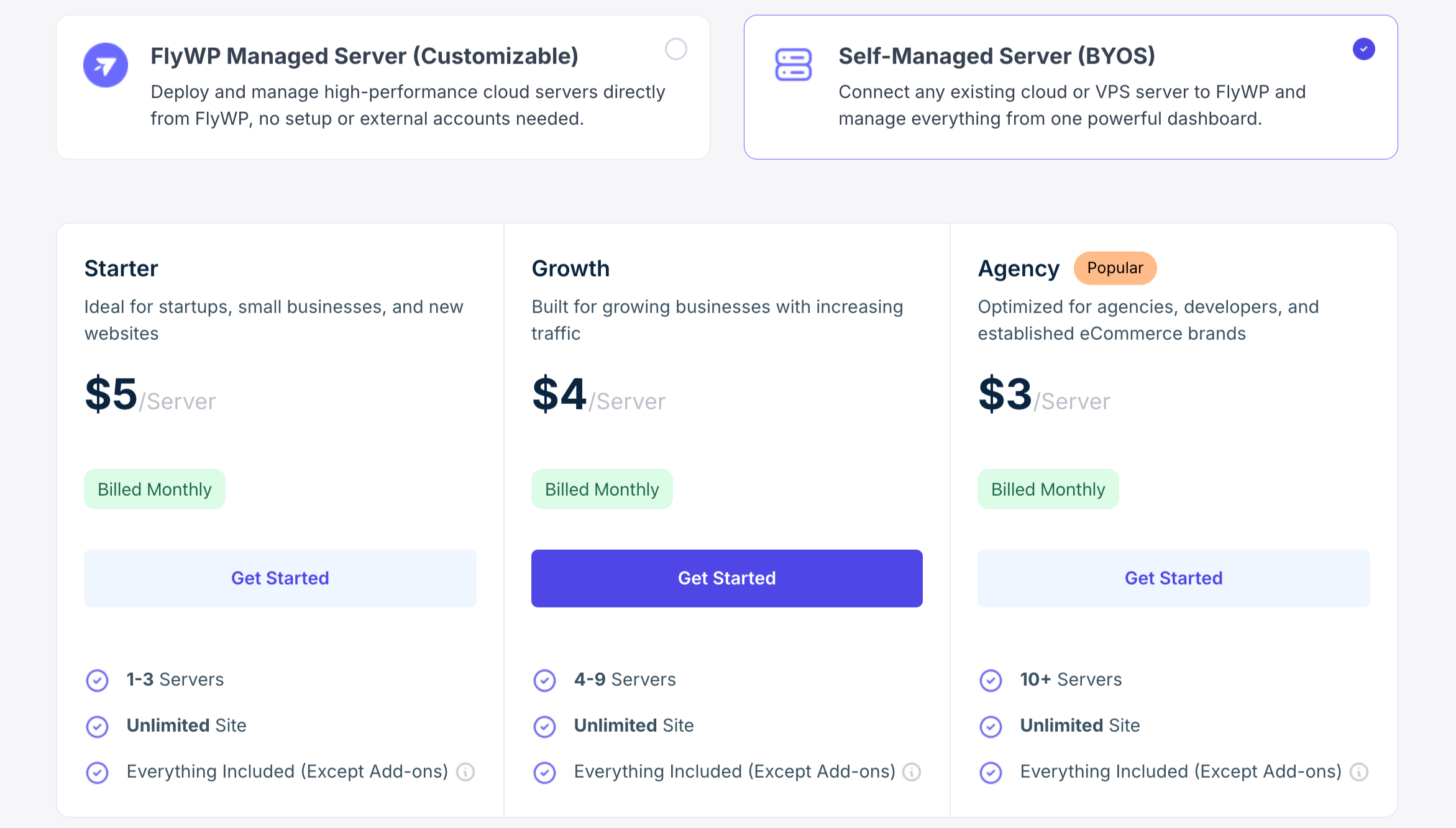
If you already use providers such as AWS, Google Cloud, or DigitalOcean, FlyWP also supports a Bring Your Own Server (BYOS) model.
You can connect your existing servers and manage them through FlyWP while keeping full control of the infrastructure itself.
Pricing: Starts from $5/server/month, with all core features included. Pricing becomes more efficient as you manage additional servers.
For the most up-to-date pricing details, visit the FlyWP pricing page.
Which One Should You Choose?
If you want easier maintenance and minimal setup, the managed option may be the better fit.
If you already use cloud infrastructure and prefer direct control, the BYOS model offers more flexibility with centralized management.
For new users, a free plan is also available to explore the platform before scaling.
How weDocs Users Benefit from FlyWP
For users of weDocs, reliable hosting can improve both reader experience and content management workflows.
Documentation visitors often want quick answers. A structured hosting setup helps pages load faster and keeps search more responsive, making it easier for users to find the information they need.
For growing knowledge bases, backend performance also matters. Teams updating articles, managing categories, or collaborating on content benefit from smoother admin performance.
During product launches, announcements, or traffic spikes, scalable infrastructure can help documentation websites remain responsive when users need them most.
Automated backups and staging environments also become useful as documentation libraries grow and content updates become more frequent.
In short, FlyWP helps create a more dependable infrastructure layer for documentation-driven websites.
Why This Matters for Support and Growth
Good documentation can reduce support tickets, improve onboarding, and help users solve problems independently.
But if your documentation website becomes slow or unreliable, those benefits can be reduced.
A more structured cloud-based WordPress management system helps reduce that friction.
With FlyWP, teams can spend less time dealing with hosting issues and more time improving content, support resources, and customer experience.
A Closer Look at FlyWP’s Core Features
FlyWP brings together the core infrastructure tools needed to run and scale WordPress websites in one unified platform.
- At the center of the experience is a centralized dashboard where you can manage servers and WordPress sites from a single interface, reducing the need to switch between multiple tools or provider panels.
- FlyWP connects directly with major cloud providers such as DigitalOcean, Google Cloud, AWS EC2, Vultr, Hetzner, Akamai, and custom servers. This gives you the flexibility to choose the infrastructure that best fits your budget, region, or performance needs.
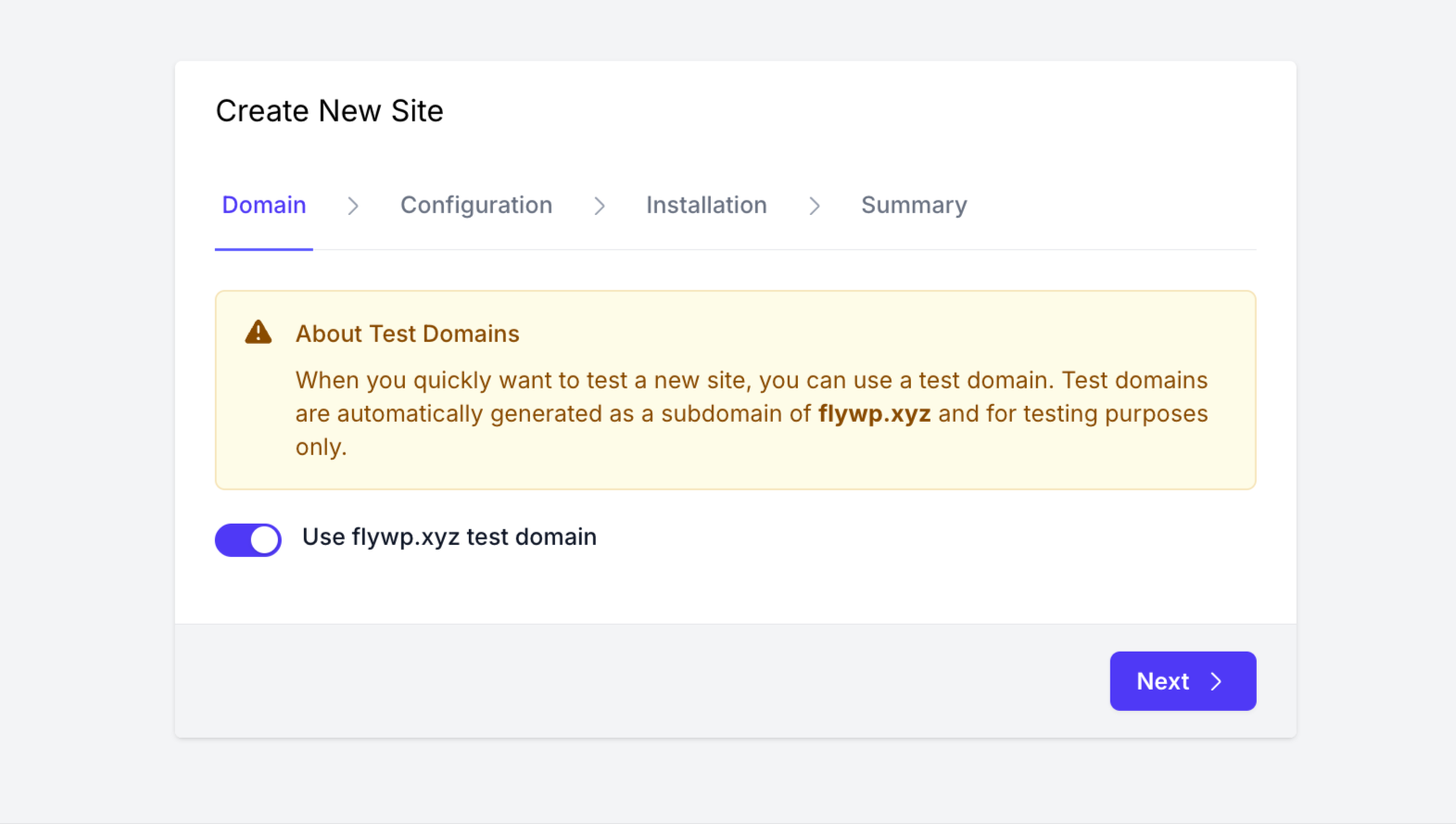
- Performance optimization is built into the system. Support for FastCGI caching, Redis, and WordPress-optimized server configurations helps websites stay responsive as traffic and activity increase.
- Security is handled through isolated Docker environments for each site, helping reduce cross-site risks and improve overall stability. Additional protections include SSL management, firewall controls, and monitoring tools.
- Backup management is designed to be practical and reliable, with automated schedules, manual backup options, and quick restoration when needed.
- For developers and advanced users, FlyWP includes staging environments, deployment workflows, command-line access, and integration options that support modern development practices.
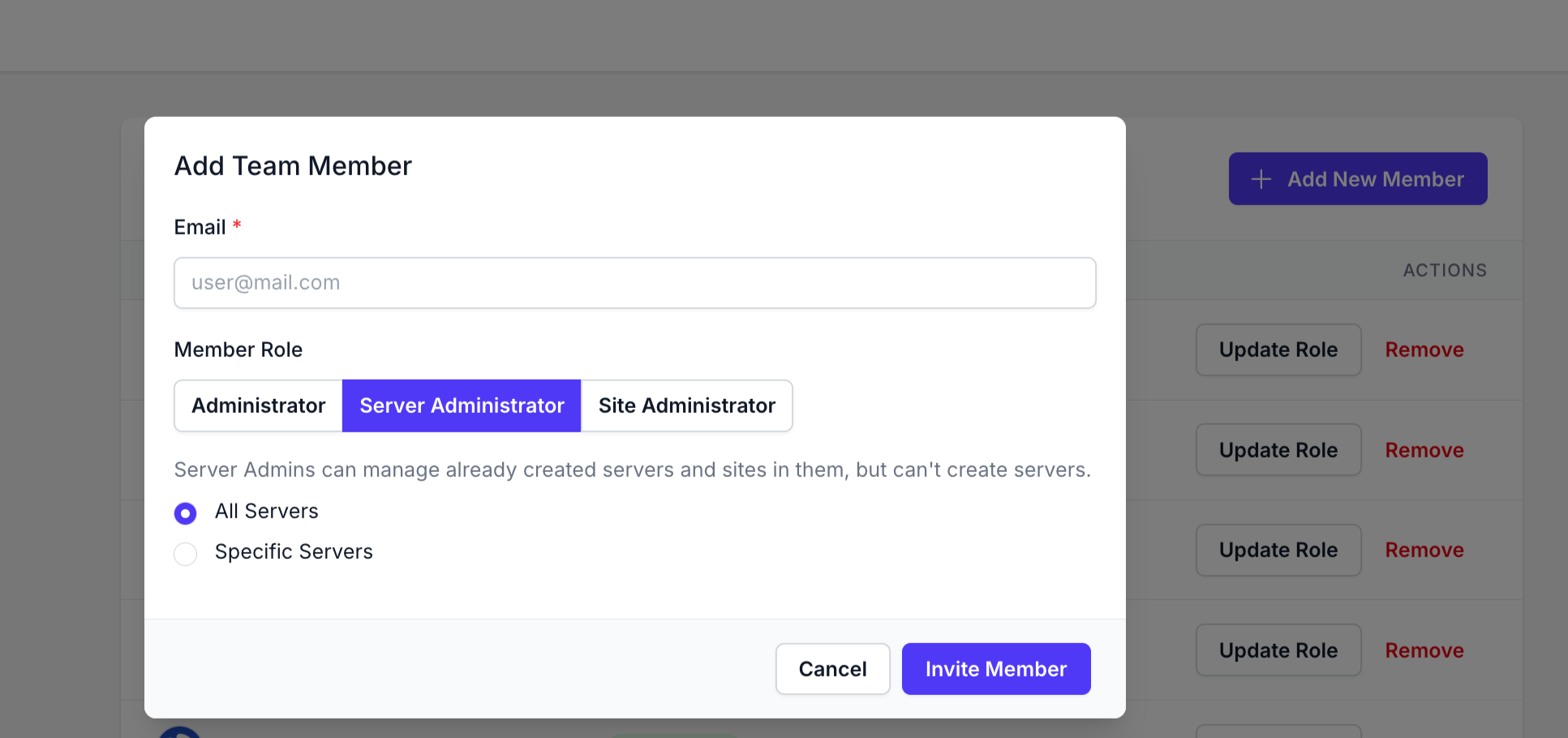
- Team collaboration is also built in through role-based access controls. You can assign permissions such as Super Admin, Server Admin, and Site Admin, giving each team member the right level of access.
- For WordPress-specific management, FlyWP supports centralized bulk updates, WP Config control, Multisite support, WP-CLI access, and Magic Login for quick dashboard access.
- It also supports multiple server stacks, including Nginx and OpenLiteSpeed, allowing you to choose the setup that best matches your performance and workflow preferences.
Check out: Explore All Features of FlyWP
Together, these features create a hosting environment that is structured, flexible, and easier to manage as your WordPress operations grow.
Is FlyWP Right for Your Documentation Site?
FlyWP can be a strong fit for teams that rely on WordPress websites and want more structure around hosting.
It is especially useful for growing documentation websites, SaaS help centers, agencies, businesses managing multiple WordPress projects, and teams that need better performance than standard shared hosting provides.
If you only run a very small static help page with minimal traffic, a simpler hosting plan may still be enough.
FlyWP is best suited for users who want a balance between flexibility, performance, and easier management.
Frequently Asked Questions (FAQ) About FlyWP
Ready to Simplify Your WordPress Hosting?
Managing WordPress infrastructure does not need to become more complicated as your documentation website grows.
With FlyWP, you get a structured managed WordPress cloud hosting solution designed to help you handle performance, scaling, and server management more efficiently.
Whether you run product documentation, help centers, knowledge bases, or multiple WordPress websites, FlyWP offers a more organized way to manage the hosting side of growth.
Start with the free plan or explore the platform further to see how it fits your workflow.
Subscribe to
weDocs blog
We send weekly newsletters,
no spam for sure!